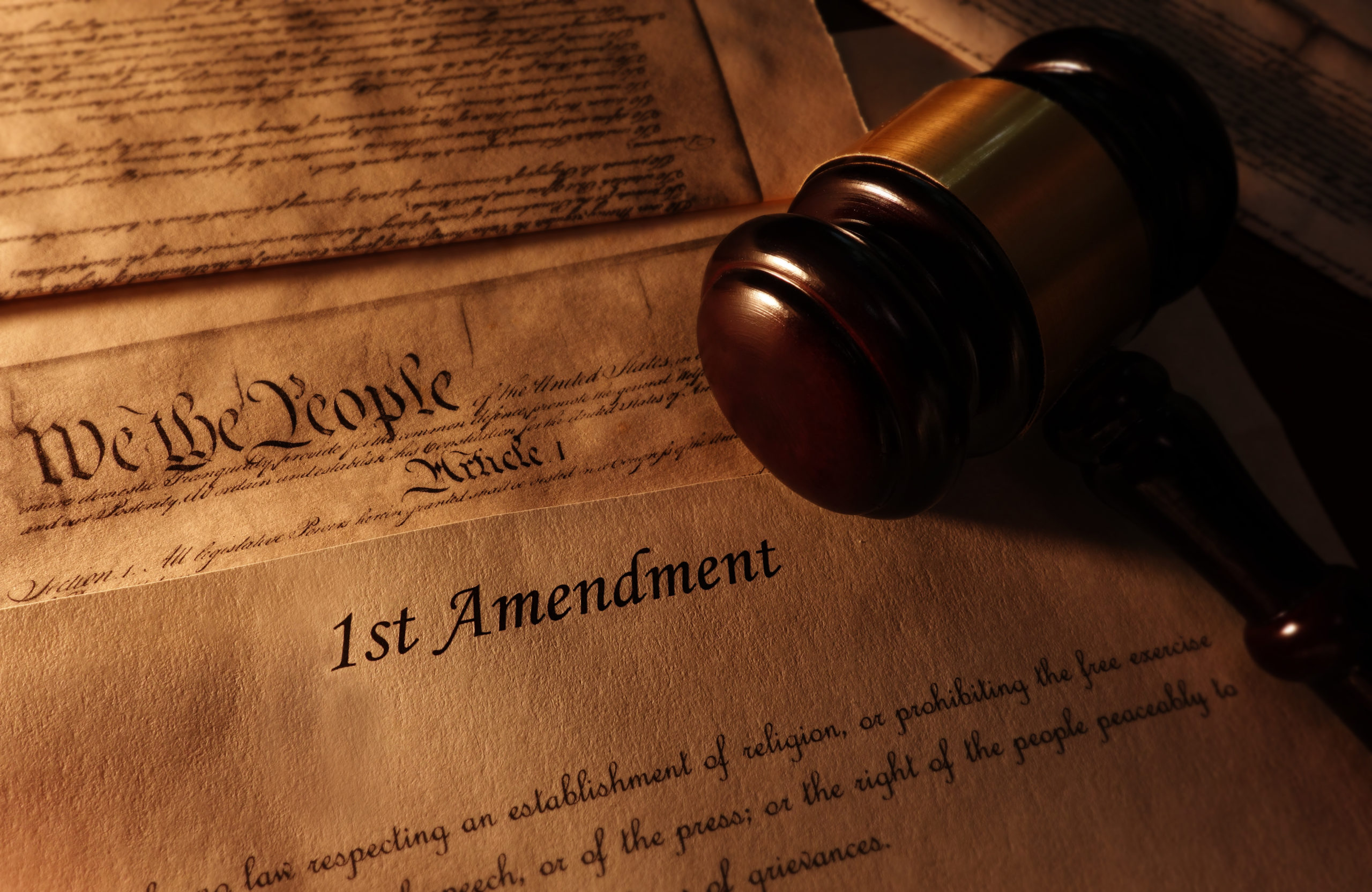
As the United States approaches its 250th birthday, a renewed debate over the meaning of the First Amendment’s religion clauses has emerged at the heart of American discourse. Speaker of the House Mike Johnson recently contributed a compelling and timely article, The True Meaning of ‘The Separation of Church and State,’ in which he reasserts a vision of American liberty that includes—not excludes—religious conviction from the public square. Drawing on deep historical roots and constitutional principles, Johnson’s argument affirms that our nation’s founding values cannot survive without the moral and spiritual framework from which they were born.
Reclaiming Jefferson’s Metaphor
Speaker Johnson’s central thesis challenges the modern interpretation of the phrase “separation of church and state,” which is frequently invoked to sanitize public life of religious influence. As Johnson rightly points out, the phrase itself does not appear in the Constitution. It comes instead from a 1802 letter written by President Thomas Jefferson to the Danbury Baptist Association.
Far from intending to bar religion from public affairs, Jefferson wrote to assure religious citizens that the federal government would not interfere in their worship. Johnson writes, “The Founders wanted to protect the church from an encroaching state, not the other way around.” This perspective is consistent with the context of Jefferson’s era—an age in which the Founders were reacting not to excessive religiosity, but to the coercive power of state-established churches such as the Church of England.
Jefferson’s “wall of separation” was thus never meant to expunge faith from the nation’s public institutions but to guarantee that government would not dictate religious belief. The First Amendment’s twin clauses—prohibiting the establishment of religion and protecting the free exercise thereof—work in tandem to ensure both freedom from religious coercion and freedom for religious expression.
Religion and Morality: The Foundations of a Republic
Speaker Johnson’s article presents a compelling case for the vital role of religious and moral virtue in upholding the American republic. He quotes George Washington’s Farewell Address: “Of all the dispositions and habits which lead to political prosperity, religion and morality are indispensable supports.” This is not a nostalgic appeal but a statement of practical necessity.
The Founders, including John Adams, believed the Constitution was designed for a self-governing people, but that such self-governance required internal restraint rooted in transcendent accountability. “Our Constitution is made only for a moral and religious people,” Adams warned. “It is wholly inadequate to the government of any other.” These sentiments are not sectarian—they are structural. The American system of liberty depends on the civic virtue that religion inspires.
In Johnson’s words, the Founders “believed in liberty that is legitimately constrained by a common sense of morality, and a healthy fear of the Creator.” In recognizing that “all men are fallen” and that “power corrupts,” the Founders understood that institutional checks and balances would never be sufficient without the moral compass provided by faith.
The Johnson Amendment: Silencing the Pulpit
Nowhere has the misunderstanding of church-state separation caused more confusion and harm than in the misapplication of the 1950s-era “Johnson Amendment.” This tax code provision prohibits churches and other religious nonprofits from engaging in political speech, threatening to revoke their tax-exempt status. Speaker Johnson, himself a constitutional attorney, calls it flatly unconstitutional.
Fortunately, recent developments offer hope. Johnson highlights that the IRS, in a Texas federal court case, agreed to a consent judgment restoring the free speech rights of religious organizations. This decision marks a “teachable moment” that could help reverse decades of fear and self-censorship among religious leaders who were previously told to remain silent in the face of moral crises.
President Trump echoed this concern in his 2017 National Prayer Breakfast address, pledging to “get rid of and totally destroy the Johnson Amendment.” The tide may be shifting toward restoring the full religious freedom guaranteed under the First Amendment—not just the freedom to believe, but also the freedom to speak, teach, and influence society.
Virtues Worth Defending
What kind of society results from marginalizing religion? Speaker Johnson warns that without the virtues “indispensably supported” by faith—such as personal responsibility, civility, respect for the rule of law, and the sanctity of life—“every nation will ultimately fall.”
He evokes Jefferson again, this time quoting an inscription at the Jefferson Memorial: “Can the liberties of a nation be secure when we have removed a conviction that these liberties are the gift of God?” Jefferson, like the other Founders, believed liberty was not a secular invention but a divine endowment, and that forgetting this truth would spell national decline.
Johnson also echoes Alexis de Tocqueville’s famous observation that “America is great because she is good, and if she ever ceases to be good, she will cease to be great.” For a republic like ours, national greatness is inseparable from moral goodness.
Conclusion: A Call to Remember
Speaker Johnson’s article is more than a historical lesson; it is a moral and civic call to arms. As he writes, “Anyone who has been misled to believe that religious principles and viewpoints must be separated from public affairs should be reminded to review their history.”
As America nears its semiquincentennial, the challenge before us is clear: to recover the principles that made liberty possible in the first place. Religious freedom is not a relic; it is the cornerstone of our national identity. Protecting that freedom, and the moral vision that accompanies it, is not only constitutional but essential for America’s survival.
Let us defend these truths with clarity and courage. Let us, in Johnson’s words, “hold fast to who we are and what we stand for.”

Steve Bowcut is an award-winning journalist. He is an editor and writer for Religious Freedom Under Fire as well as other security and non-security online publications. Follow and connect with Steve on Substack and Facebook.