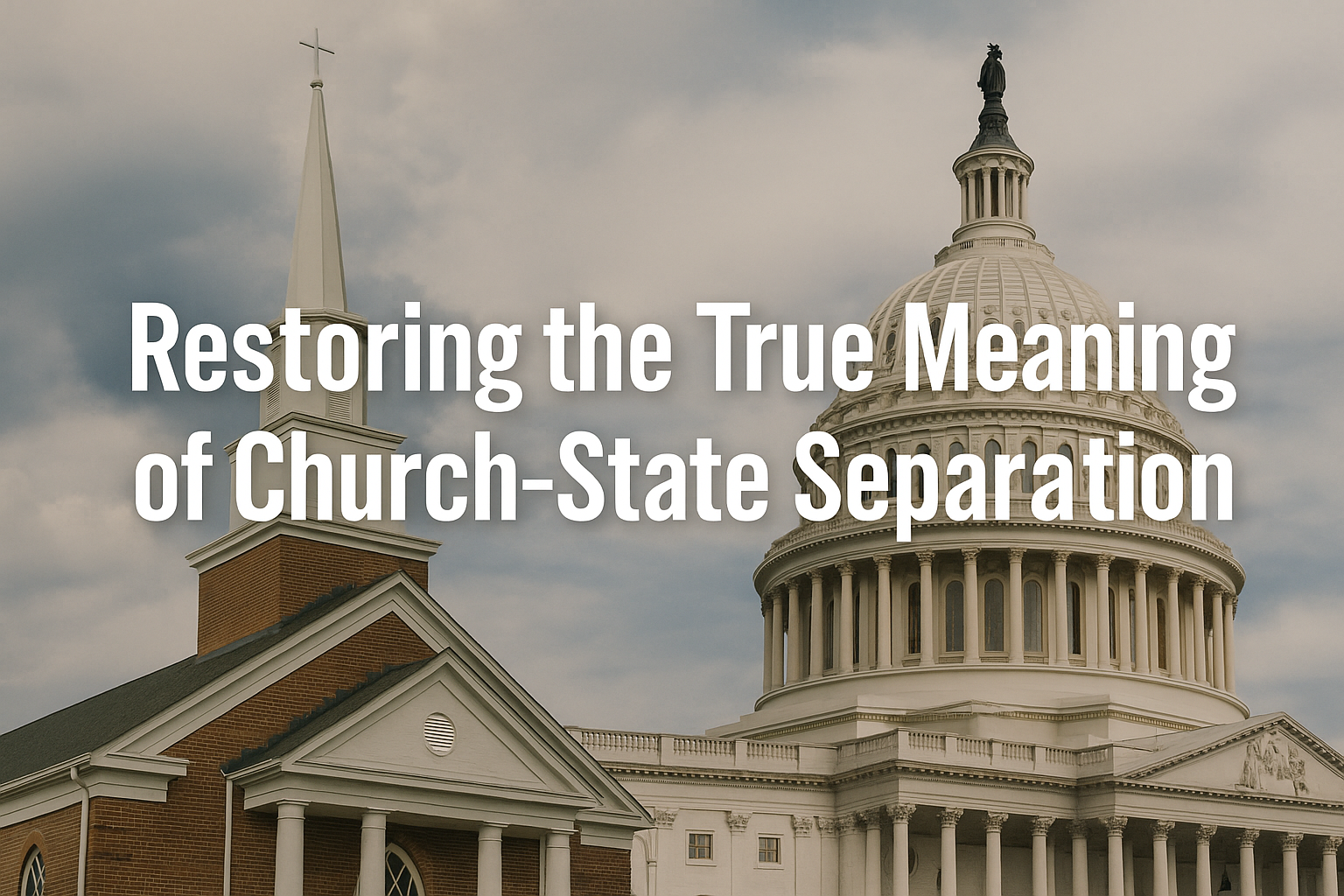
Recently, the debate over religious liberty and religious authority has once again risen to the forefront of American public life. At the heart of this discussion lies a critical question: How do we balance the freedom to practice one’s beliefs without coercion or restriction while preserving the communal norms and traditions deeply embedded in religious communities?
Understanding the Ideologies: Liberty and Authority
Religious liberty is the principle guaranteeing individuals the right to freely choose, practice, express, or abstain from religious beliefs without government interference. Central to American identity, it emphasizes autonomy, pluralism, and protection from religious coercion or discrimination.
Conversely, religious authority underscores adherence to established doctrines, emphasizing communal adherence to traditional religious teachings and practices. Religious authority prioritizes moral guidance from institutions and leaders, community cohesion, and the continuation of shared ethical norms.
These two perspectives often collide when societal debates intersect with personal freedoms, such as LGBTQ+ rights, public education, or governmental endorsement of religious practices.
The Utah Compromise: A Model for Balancing Interests
In 2015, Utah provided a compelling example of balancing these competing ideologies with legislation known as the “Utah Compromise.” Facing intense pressure from both religious institutions and advocates for LGBTQ+ rights, Utah enacted a law that simultaneously extended anti-discrimination protections based on sexual orientation and gender identity in employment and housing, while ensuring broad exemptions for religious organizations. Religious institutions retained autonomy to practice beliefs within their internal governance, while LGBTQ+ citizens received important civil protections.
The Utah Compromise demonstrates how states might navigate the intricate path of balancing religious authority with religious liberty. By explicitly clarifying boundaries, the legislation set a standard that sought harmony rather than fueling polarization. While imperfect to some advocates on both sides, it remains an instructive framework in achieving mutual respect and coexistence.
The Renewed Push for Mandated Bible Reading and Prayer in Schools
Contrasting sharply with the inclusive approach of the Utah Compromise, recent legislative efforts in various states to mandate Bible readings or prayer in public schools reveal the dangers of tipping too heavily toward religious authority. Proponents of these measures argue they restore moral and traditional values, yet they run counter to long-established constitutional precedents ensuring state neutrality regarding religious matters.
Landmark Supreme Court rulings such as Engel v. Vitale (1962) and Abington School District v. Schempp (1963) clearly prohibit mandated religious activities in public schools. Despite this, movements persist to integrate religious authority into educational contexts, potentially marginalizing students from minority religious or secular backgrounds.
School Choice as a Possible Solution
One potential solution for parents seeking religious instruction alongside basic education is school choice. Charter schools or private religious schools offer viable alternatives, allowing families to select educational environments aligned with their religious values without compromising public education’s neutrality. This approach respects religious liberty by empowering parents and communities to choose institutions consistent with their beliefs, thereby alleviating conflicts within public schools.
Balancing Liberty and Authority: A Crucial Warning
Religious liberty remains an essential, constitutionally protected right in the United States. However, overreactions to perceived losses of religious influence in the public sphere that swing toward authoritarian measures are inherently dangerous. History repeatedly illustrates that when governments sanction or mandate particular religious practices, individual freedoms and minority rights inevitably suffer.
Society must avoid compensating for past grievances with measures that erode the foundations of individual liberty. As the Utah Compromise demonstrates, inclusive approaches that protect civil rights while respecting religious freedoms can yield sustainable solutions.
Ultimately, religious freedom thrives in a balanced environment—one where liberty is broadly upheld, religious practices respected, and authority appropriately confined within communities of voluntary affiliation. In striving for this equilibrium, the United States reaffirms its foundational commitments to pluralism, tolerance, and fundamental human rights.

Steve Bowcut is an award-winning journalist. He is an editor and writer for Religious Freedom Under Fire as well as other security and non-security online publications. Follow and connect with Steve on Substack and Facebook.