Edit September 2025: Please note we are fully aware that the first paragraph of this article and other select passages did not age well after their initial publication in February 2025. Obviously the conflict between Russia and Ukraine did not end as everyone hoped. We chose to leave the article intact, to reflect the sentiments of the author at the time of initial publication.
As the conflict between Russia and Ukraine approaches a potential resolution, concerns mount over the fate of religious freedoms in territories that may fall under Russian control. Historically, Russia has exhibited a pattern of religious repression, particularly against “nontraditional” religious minorities, raising alarms about the future of diverse faith communities in these regions.
Territorial Realities and Potential Shifts
Recent developments indicate that Russia maintains control over significant portions of Ukrainian territory. As of February 18, 2025, Russian forces occupied approximately 112,248 square kilometers of Ukrainian land, constituting about 18.6% of Ukraine’s territory. This area is roughly equivalent to the size of the U.S. state of Virginia1. Notably, Russia asserts legal claims over regions including Donetsk, Luhansk, Zaporizhzhia, and Kherson, with officials stating these areas will not be returned to Ukraine2.
A History of Religious Repression
The Russian constitution proclaims a secular state with guarantees of religious freedom3. However, in practice, the government imposes significant restrictions, especially on “nontraditional” religious groups. Legislation criminalizes “extremism” without clear definitions, enabling the state to prosecute a wide range of nonviolent religious activities. This has led to fines, detentions, and criminal charges against various religious communities, including Protestants, Jehovah’s Witnesses, and others4.
In occupied Ukrainian territories, reports have surfaced of intensified religious persecution. Religious leaders have faced intimidation, and authorities have pressured them to either remain silent about the war or publicly support Russian actions, regardless of their personal convictions5. Such measures have created a climate of fear among diverse religious communities.
A Call to Defend Religious Freedom
On February 20, 2025, His Beatitude Sviatoslav, Father and Head of the Ukrainian Greek Catholic Church, met with Paula White-Cain, head of the Faith Office at the White House. During this meeting, he emphasized the critical link between Ukraine’s sovereignty and the preservation of religious freedom6:
“Obviously, we discussed the issue of religious freedom in Ukraine, including the occupied territories. I provided a brief overview of the history of religious freedom in Ukraine following the collapse of the USSR and explained that for Orthodox, Catholics, Protestants, Jews, and Muslims alike, the existence of the Ukrainian state guarantees religious freedom. Conversely, a return to the Soviet Union, which Putin seeks to restore, would mean a return to the catacombs and the destruction of our Church.”
The delegation highlighted the severe restrictions imposed on religious organizations in occupied territories, including the destruction of places of worship and the imprisonment of clergy. While some, like Fathers Ivan Levytsky and Bohdan Heleta, have been released through diplomatic efforts, many, especially Protestant pastors, remain without high-level advocates. His Beatitude Sviatoslav urged for their release and called for any peace agreements to enshrine respect for human rights, adherence to international law, and guarantees of religious freedom.
A Collective Responsibility
The potential erosion of religious freedoms in territories reverting to Russian control is not just a regional concern but a global one. All individuals who cherish freedom must raise their voices, insisting that any peace agreement must unequivocally protect the rights of all religious communities. The international community’s vigilance and advocacy are paramount to ensuring that the conclusion of this conflict does not herald a new chapter of oppression for believers in these regions.
In these pivotal times, the defense of religious liberty stands as a testament to our collective commitment to human dignity and the fundamental rights of all individuals.
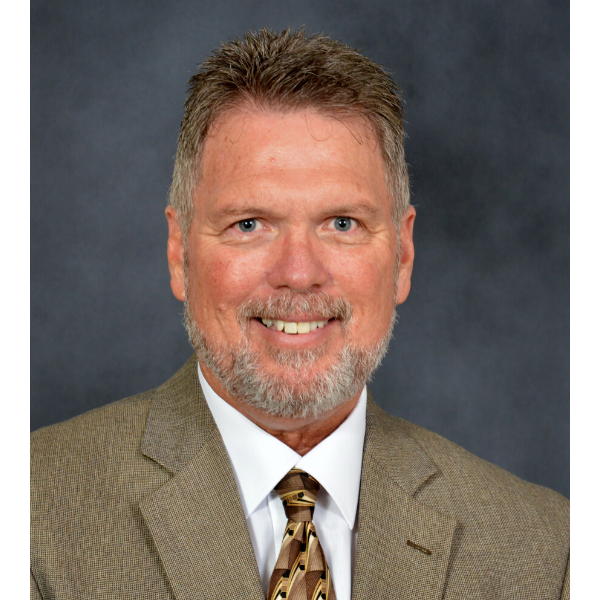
Steve Bowcut is an award-winning journalist. He is an editor and writer for Religious Freedom Under Fire as well as other security and non-security online publications. Follow and connect with Steve on Substack and Facebook.
3 https://www.state.gov/reports/2022-report-on-international-religious-freedom/russia/
4 https://www.uscirf.gov/countries/russia