The world is an increasingly polarized place. The middle ground; that ideological place between the two extremes, has become nearly uninhabitable. We defend our social, cultural, economic, and political ideals with such zeal that any belief, however near, is declared to be utterly unfit if not perfectly aligned with our own. There is no space available in the middle ground, not because it is a crowded place, rather it is barren because few can withstand the forces exerted on anyone who dares to dwell there. It is a lonely place because both ends of the ideological spectrum will inevitably villainize you.
It should be noted that truth rarely, if ever, lives at the far end of an ideological spectrum; it does not dwell at the poles.
A willingness to compromise is no longer seen as a positive attribute. Compromise is viewed as a weakness because the desired outcome has become the complete and undeniable domination of all competing ideas; a take no prisoners mentality.
Somewhere along the line, we lost the capacity to embrace the reality that two nearly opposing ideas can be true at the same time. To be clear, to jeopardize one’s God-given, and presumably government-protected, inalienable freedom is a mistake. While this is true, it is also true that a government has the responsibility to protect the lives of its citizens.
In the current case of our God-given right to assemble and worship as we see fit versus the government’s responsibility to protect citizens against the spread of the coronavirus, both are true.
Most importantly it should be noted that the US Constitution expressly prohibits any law that restricts or infringes on the right of religious expression and worship. So, even before the discussion can begin governments should acknowledge that they have no authority to restrict religious behavior.
It is reasonable to assume that people who treasure their freedom of religious expression also want to avoid contracting COVID-19 or exposing anyone else to the disease. These people are not dunderheads too dimwitted to understand that congregating in large crowds increases the risk of transmitting the virus. The objection is that they are not willing to let their government take their right to worship away by force. The very fact that they have lived to adulthood is evidence that they are capable of understanding risk and avoiding danger. They are clearly willing to forgo risky behavior on their own accord but are not willing to be compelled to do so.
Should people be meeting in large groups to worship during a highly contagious pandemic? No, they should not. Should the government deploy, as its opening salvo in the discussion, laws to restrict this behavior even before the practice has been proven to be dangerous or even exhibited? No, they should not. Both of these things are true at the same time.
A wise religious congregation will find alternative methods for worship to keep congregants and their families safe. Wise governments will realize that their fundamental role is to make the facts available so that citizens can make informed decisions. Only after there is evidence that a religious practice has created an environment that is unsafe for people outside of the informed participants should the government step in to protect those people.
Religious freedom is an inalienable right. It should not be curtailed based on a theory of potential harm. At the same time, it is incumbent upon religious groups to behave in a manner that protects the entire population.
If lawmakers and religious leaders dwelt in the middle ground, they could each understand the other side of the discussion and be able to reach a mutually suitable solution. But they don’t live there. Life at the poles makes it nearly impossible to see another point of view. Polarization can make both sides of an issue behave contrary to their best interest.
At one pole you will find adherents to the belief that governments can and should rule with an iron fist. They are convinced from the very outset that anyone expressing a hesitancy to relinquish religious freedom during a pandemic is a dangerous fanatic, and they must be squashed for the good of the whole. This heavy-handed approach is counterproductive to their presumed goal of maintaining a free and open society.
At the other pole reside religious people that push back against the idea of a government infringing on a God-given right for any reason. They find themselves protesting the government’s actions by engaging in risky behavior that they otherwise would not have. The same behavior can be seen in California as the State Government closes beaches, presumably because government leaders believe beachgoers can not be trusted to maintain a safe physical distance. Protesters show up in large groups to protest the idea that they are not responsible enough to not show up in large groups on the beach.
Religious freedom is arguably our most precious God-given right, and it should be protected. Looking from the middle ground it is evident that the best way to protect this right is to act in a manner that reassures all citizens that religious people will not engage in practices that endanger others.
Fortunately, indications are that we have turned a corner and the spread of COVID-19 is beginning to subside. There is talk of relaxing restrictions, including the size of groups that can congregate. We should all pray that these trends continue.
Of paramount importance for people of faith is to remember that we are the government – not at war with the government. We have an equal voice at the ballot box, just like all other citizens. We should always remember this moment in time. This moment when we were concerned that our religious freedom was so readily commandeered and vote in a manner that will suggest that next time there is a crisis of any type, religious freedoms will not be threatened. We should also behave in a responsible manner that indicates we understand our responsibility to protect all citizens. Both can be true.
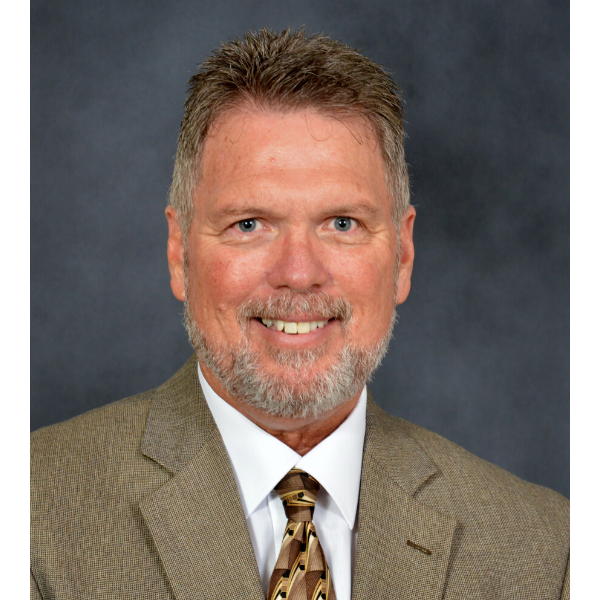
Steve Bowcut is an award-winning journalist. He is an editor and writer for Religious Freedom Under Fire as well as other security and non-security online publications. Follow and connect with Steve on Substack and Facebook.